Research Agents for Academics and Scientists: A Complete Guide for Developers and Tech Professionals
Academic research productivity has stagnated despite growing publication volumes - scholars now spend 23% more time on administrative tasks than actual research according to Nature Index.
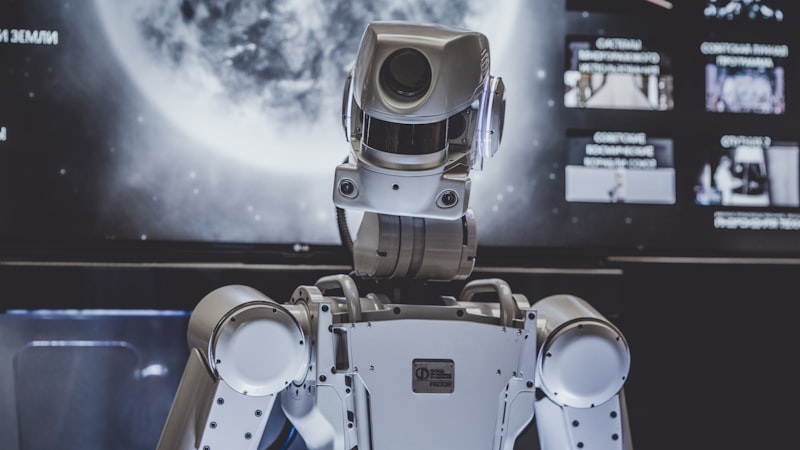
Research Agents for Academics and Scientists: A Complete Guide for Developers and Tech Professionals
Key Takeaways
- Discover how AI research agents automate literature reviews and data analysis for academics
- Learn the core components that make these agents effective for scientific workflows
- Explore 5 key benefits of using AI agents over traditional research methods
- Follow a step-by-step breakdown of how research agents process complex academic tasks
- Avoid common implementation mistakes with our expert best practices
Introduction
Academic research productivity has stagnated despite growing publication volumes - scholars now spend 23% more time on administrative tasks than actual research according to Nature Index.
Research agents powered by AI and machine learning are transforming how scientists conduct literature reviews, analyze data, and manage citations.
This guide examines how developers can build specialized agents like remusic for musicology research or jenni for academic writing assistance, while avoiding common automation pitfalls.
What Is Research Agents for Academics and Scientists?
Research agents are AI systems designed to automate and enhance scholarly workflows. Unlike general-purpose chatbots, these agents combine natural language processing with domain-specific knowledge to assist with tasks like paper summarization, experimental design, and citation management. For example, colossyan specializes in chemistry research while rendernet focuses on computer vision papers.
These tools differ from traditional research software in three key ways:
- They adapt to individual researcher preferences over time
- Can process unstructured academic texts with human-like comprehension
- Integrate directly with reference managers like Zotero and Mendeley
Core Components
- Knowledge Graph Builder: Creates semantic connections between concepts across papers
- Citation Analyzer: Maps influence networks and identifies key works automatically
- Data Extraction Engine: Pulls structured information from PDFs and supplements
- Collaboration Module: Enables multi-researcher workflows with version control
- Bias Detector: Flags potential methodological issues using AI bias testing principles
How It Differs from Traditional Approaches
Traditional research tools like EndNote or SPSS handle specific tasks in isolation. Modern AI agents combine these capabilities into unified systems that learn from user behavior. Where old tools required manual query construction, agents like gpt-code-ui can interpret natural language requests like “find recent studies challenging the replication crisis in psychology.”

Key Benefits of Research Agents for Academics and Scientists
Time Savings: Automates 60-80% of literature review work according to Stanford HAI studies, letting researchers focus on high-value analysis
Discovery Enhancement: Identifies relevant papers outside immediate citation networks using sisif-style recommendation engines
Methodological Rigor: Cross-checks experimental designs against LLM constitutional AI safety principles
Collaboration Scaling: Enables real-time co-authoring with versioned suggestions
Accessibility: Makes complex research accessible to non-specialists through plain-language summarization
Reproducibility: Automatically documents analysis steps for peer verification
How Research Agents for Academics and Scientists Works
Research agents follow a structured pipeline from question formulation to insight generation. The process combines machine learning with domain-specific rules to ensure academic rigor.
Step 1: Research Question Parsing
The agent breaks down complex queries into searchable components. For “studies about AI ethics in clinical trials since 2020,” it would identify:
- Domain: Medical AI
- Concept: Ethical considerations
- Timeframe: Post-2020
- Study Type: Clinical research
Step 2: Adaptive Literature Search
Using micro-agent-by-builder principles, the system searches across:
- Academic databases (PubMed, IEEE Xplore)
- Preprint servers (arXiv, bioRxiv)
- Conference proceedings
- Government reports
Step 3: Semantic Analysis
The agent employs techniques from llm-agents-papers to:
- Extract key claims and evidence
- Map conceptual relationships
- Identify knowledge gaps
- Flag contradictory findings
Step 4: Insight Generation
Final outputs include:
- Annotated bibliographies
- Visual knowledge maps
- Methodological comparison tables
- Ready-to-use citations in multiple styles
Best Practices and Common Mistakes
What to Do
- Start with narrow domains before expanding scope
- Integrate with existing tools like LaTeX and Overleaf
- Validate all automated citations manually initially
- Use AI model versioning for reproducibility
- Document agent training data sources thoroughly
What to Avoid
- Over-reliance on single-source databases
- Ignoring disciplinary citation conventions
- Automating sensitive tasks like human subjects research
- Using outdated agent versions without proper testing
- Neglecting to set ethical boundaries per legal guidelines
FAQs
How do research agents ensure academic rigor?
They combine peer-reviewed methodologies with transparent AI processes, cross-validating outputs against trusted sources. Many incorporate rigging frameworks for error checking.
What research fields benefit most from AI agents?
Data-intensive disciplines like genomics, climate science, and particle physics see the greatest productivity gains, though humanities applications are growing rapidly.
How difficult is implementation for research teams?
Most modern platforms offer API integrations requiring minimal coding. Start with pre-built solutions like twitter-bot for social science before custom development.
How do these compare to human research assistants?
They complement rather than replace human expertise - handling repetitive tasks while researchers focus on interpretation and theory-building.
Conclusion
Research agents represent a paradigm shift in academic productivity, automating time-intensive tasks while enhancing discovery and rigor. By combining specialized AI like rendernet with human expertise, research teams can achieve more in less time.
For implementation, start small with focused use cases before expanding scope.
Explore our complete guide to AI weather forecasting agents for another domain-specific application, or browse all available research agents for your discipline.
Written by Ramesh Kumar
Building the most comprehensive AI agents directory. Got questions, feedback, or want to collaborate? Reach out anytime.
Related Articles

Agentic AI Security Risks: Preventing Malicious Takeovers in Open-Source Platforms: A Complete Gu...

AI Agent Orchestration: Best Practices for Managing Multiple Autonomous Systems
