How AI Agents Enhance Accessibility for People with Disabilities: A Complete Guide for Developers...
Over 1 billion people worldwide live with disabilities, according to the World Health Organisation, yet many digital environments remain inaccessible.
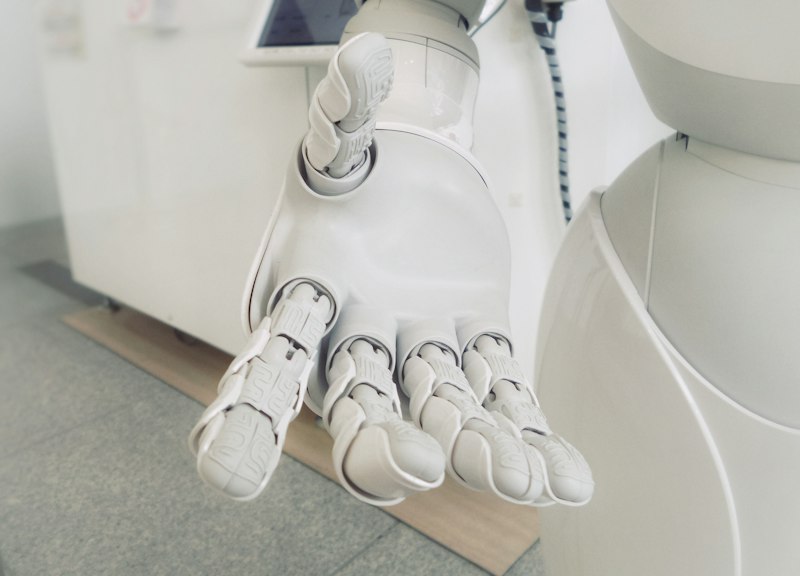
How AI Agents Enhance Accessibility for People with Disabilities: A Complete Guide for Developers, Tech Professionals, and Business Leaders
Key Takeaways
- AI agents automate accessibility features using natural language processing and predictive analytics.
- They provide personalised support for individuals with visual, auditory, motor, and cognitive disabilities.
- Integration with existing systems enhances user experience without significant infrastructure changes.
- These solutions reduce costs and improve compliance with accessibility regulations.
- Advancements in machine learning continue to expand their capabilities and applications.
Introduction
Over 1 billion people worldwide live with disabilities, according to the World Health Organisation, yet many digital environments remain inaccessible.
This gap represents both a social challenge and a market opportunity for technology professionals. AI agents bridge this divide by interpreting user needs and adapting interfaces in real-time.
This guide explores how these intelligent systems transform accessibility through automation and personalisation. We examine their components, benefits, implementation steps, and best practices for development teams.

What Is How AI Agents Enhance Accessibility for People with Disabilities?
AI agents enhance accessibility by using machine learning to interpret and adapt digital content for users with disabilities. They process inputs like voice commands, gestures, or eye movements to provide alternative interaction methods. These systems analyse user behaviour patterns to predict needs and adjust interfaces dynamically. For instance, they can convert text to speech for visually impaired users or simplify navigation for those with motor impairments.
Real-world applications include screen readers that describe images contextually and communication aids that translate sign language into text. These agents operate across devices, from smartphones to smart home systems. They empower users by providing greater independence in digital interactions. Their adaptive nature makes them particularly effective for diverse accessibility requirements.
Core Components
- Natural Language Processing: Interprets and generates human language for voice commands and responses
- Computer Vision: Analyses visual content to describe images, detect obstacles, or read text aloud
- Predictive Analytics: Anticipates user needs based on behaviour patterns and preferences
- Adaptive Interfaces: Modifies layouts, colours, and navigation elements in real-time
- Multi-modal Input/Output: Supports various interaction methods like voice, touch, and gesture controls
How It Differs from Traditional Approaches
Traditional accessibility tools often provide static, one-size-fits-all solutions with limited adaptability. They require manual configuration and offer little personalisation. AI agents dynamically adjust to individual users’ needs and contexts. They learn from interactions to improve assistance over time. This proactive approach creates more intuitive and effective accessibility support.
Key Benefits of How AI Agents Enhance Accessibility for People with Disabilities
Personalised Assistance: AI agents tailor support to individual abilities and preferences, improving user experience. Tools like Ask-Ida-C adapt communication styles based on user responses.
Real-time Adaptation: Systems modify interfaces instantly based on context and user behaviour. This ensures optimal accessibility across different applications and environments.
Cost Efficiency: Automation reduces the need for custom development while scaling accessibility features. Compose-AI demonstrates how reusable components lower implementation costs.
Enhanced Independence: Users gain greater control over digital interactions without constant human assistance. This promotes confidence and self-reliance in daily technology use.
Compliance Automation: Agents help maintain accessibility standards across platforms by continuously monitoring and adjusting content. They simplify adherence to regulations like the Equality Act 2010.
Multi-platform Consistency: Solutions work across devices and applications, providing uniform experience. HubSpot integrations show how accessibility features extend through enterprise systems.

How AI Agents Enhance Accessibility for People with Disabilities Works
AI accessibility agents follow a structured process to interpret needs and provide appropriate support. They combine sensor data, user preferences, and contextual information. The system then generates adaptive responses through various output methods. This creates a continuous improvement cycle that refines assistance over time.
Step 1: Input Analysis
The agent collects data from user interactions, sensors, and environmental inputs. It processes voice commands, gestures, eye movements, or assistive device signals. Linkz-AI demonstrates effective input handling across multiple modalities. Analysis identifies patterns and requirements for accessibility adjustments.
Step 2: Context Interpretation
Machine learning models assess the user’s situation, abilities, and immediate needs. They consider factors like location, task complexity, and historical preferences. This context awareness enables more relevant and timely assistance. Interpretation accuracy improves as the system learns from each interaction.
Step 3: Adaptive Response Generation
Based on analysis, the agent generates appropriate accessibility features. These might include text-to-speech output, interface simplification, or alternative control methods. AGIXT shows how responses adapt to different disability types and severity levels. Generation prioritises clarity and usability for the specific user.
Step 4: Feedback Integration
The system collects user feedback through explicit ratings or implicit behaviour analysis. This data trains machine learning models to improve future responses. Continuous learning ensures the agent becomes more effective over time. Feedback loops are essential for maintaining relevance as user needs evolve.
Best Practices and Common Mistakes
Implementing AI accessibility requires careful planning and user-centric design. Follow proven methods to ensure effectiveness and avoid common pitfalls. Consider both technical capabilities and human factors in your approach.
What to Do
- Involve users with disabilities throughout development to ensure real-world usability
- Test across multiple disability types to identify diverse needs and edge cases
- Prioritise simplicity in interfaces to avoid overwhelming users with complex options
- Ensure compatibility with existing assistive technologies and platform standards
What to Avoid
- Assuming uniform needs across different disability types and individual users
- Over-relying on automation without human oversight for critical accessibility features
- Neglecting performance optimization, which can delay responses for users needing immediate assistance
- Ignoring privacy concerns when handling sensitive disability and usage data
FAQs
How do AI agents determine the right accessibility features for different users?
AI agents analyse user interactions, stated preferences, and behavioural patterns. They apply machine learning models trained on diverse disability data sets. The system then matches features to individual needs while allowing manual adjustments.
Which types of disabilities benefit most from AI agent assistance?
Visual, auditory, motor, and cognitive disabilities all see significant benefits. AI agents for sentiment analysis show particular value for users with communication challenges. The technology adapts to various impairment levels and combinations.
What technical resources are needed to implement accessibility AI agents?
Development requires machine learning expertise, accessibility knowledge, and user testing capabilities. Tools like Botnation provide frameworks for building adaptive interfaces. Start with pilot projects focusing on specific disability types before expanding.
How do AI accessibility solutions compare to human-assisted alternatives?
AI agents provide 24/7 availability and consistent performance at lower operational costs. They complement human assistance rather than replacing it entirely. For complex or emotional support needs, human interaction remains valuable alongside automated systems.
Conclusion
AI agents transform accessibility by providing personalised, adaptive support across digital platforms. They leverage machine learning to interpret needs and modify interfaces in real-time. These solutions enhance independence while reducing implementation costs for organisations.
The technology continues to evolve with improvements in natural language processing and predictive analytics. RAG for enterprise knowledge bases shows how accessibility features integrate with broader AI systems. Developers should prioritise user involvement and continuous testing.
Explore available solutions at browse all AI agents and learn more about implementation in our AI agents for quality assurance testing guide. These resources provide practical starting points for your accessibility projects.
Written by Ramesh Kumar
Building the most comprehensive AI agents directory. Got questions, feedback, or want to collaborate? Reach out anytime.
Related Articles

Agentic AI Security Risks: Preventing Malicious Takeovers in Open-Source Platforms: A Complete Gu...

AI Agent Orchestration: Best Practices for Managing Multiple Autonomous Systems
