AI Misinformation and Deepfakes: A Complete Guide for Developers and Business Leaders
Did you know that AI-generated fake news spreads six times faster than factual information? As machine learning advances, the threat landscape for AI misinformation and deepfakes has expanded dramatic
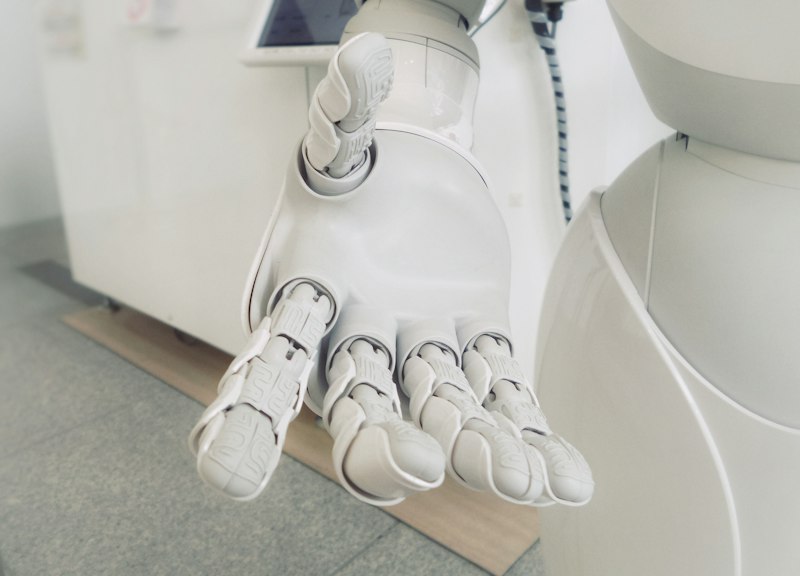
AI Misinformation and Deepfakes: A Complete Guide for Developers and Business Leaders
Key Takeaways
- Learn how AI-generated misinformation spreads through deepfake technology
- Understand the machine learning models behind synthetic media creation
- Discover automated detection methods for AI misinformation
- Explore ethical frameworks for responsible AI agent deployment
- Gain practical strategies to mitigate business risks from deepfakes
Introduction
Did you know that AI-generated fake news spreads six times faster than factual information? As machine learning advances, the threat landscape for AI misinformation and deepfakes has expanded dramatically.
This guide examines the technical foundations of synthetic media creation, detection methodologies, and strategic responses for tech professionals. We’ll cover everything from neural network architectures to enterprise risk mitigation frameworks.

What Is AI Misinformation and Deepfakes?
AI misinformation refers to false content generated or amplified by artificial intelligence systems, while deepfakes use generative adversarial networks (GANs) to create synthetic media. These technologies can produce convincing fake videos, audio recordings, and text that appear authentic.
The GPTlocalhost agent demonstrates how easily language models can generate plausible misinformation at scale. Meanwhile, tools like Recast Studio enable automated video manipulation with frightening accuracy.
Core Components
- Generative Models: Neural networks trained on massive datasets to create new content
- Automation Pipelines: Systems that scale misinformation production without human oversight
- Detection Algorithms: Counter-AI designed to identify synthetic media artifacts
- Distribution Networks: Social media APIs and bot networks that amplify reach
How It Differs from Traditional Approaches
Unlike manual disinformation campaigns, AI-powered systems can generate thousands of unique variations in seconds. Machine learning models continuously improve through feedback loops, making detection increasingly challenging.
Key Benefits of Understanding AI Misinformation
Risk Mitigation: Learn to identify synthetic content before it impacts your organization
Technical Literacy: Understand the AI architectures behind modern disinformation tools
Ethical Frameworks: Implement responsible AI agent deployment practices
Competitive Advantage: Develop detection capabilities before regulations mandate them
Strategic Planning: Prepare crisis response protocols for potential deepfake incidents
For developers working with automated content systems, these insights prove particularly valuable when designing verification layers.
How AI Misinformation and Deepfakes Work
The creation and dissemination process involves multiple technical stages, each with distinct machine learning components.
Step 1: Data Collection and Training
Models scrape millions of images, videos, or text samples to learn patterns. The Sourcegraph Cody agent demonstrates how automated data aggregation works at scale.
Step 2: Content Generation
GANs compete to create increasingly convincing fakes - one network generates while another attempts detection. This arms race produces remarkably authentic outputs.
Step 3: Automated Enhancement
Tools like PromptForm Run GPT in Bulk refine raw outputs through iterative improvements, removing telltale artifacts.
Step 4: Targeted Distribution
AI agents analyze engagement patterns to micro-target vulnerable audiences, as explored in our Twitter bot automation guide.
Best Practices and Common Mistakes
What to Do
- Implement multi-modal verification systems combining visual, audio, and metadata analysis
- Train staff using interactive deepfake examples
- Monitor black markets for AI toolkits using automated threat intelligence
- Develop cryptographic provenance standards for media assets
What to Avoid
- Relying solely on human moderators for detection
- Ignoring metadata analysis in favor of content inspection
- Underestimating the speed of AI misinformation spread
- Failing to update detection models regularly
FAQs
How accurate are current deepfake detection methods?
Leading systems achieve 92-98% accuracy in lab conditions, though real-world performance varies. The Data Science Trello Board agent helps teams track evolving detection benchmarks.
What industries face the highest deepfake risks?
Financial services, political organizations, and media companies are prime targets. Our disaster response coordination guide outlines sector-specific mitigation strategies.
How can developers start building detection tools?
Begin with open-source libraries like Microsoft’s Video Authenticator. The OPT agent provides useful starter templates for synthetic media analysis.
Are there legitimate uses for deepfake technology?
Yes - film restoration, accessibility tools, and educational simulations demonstrate positive applications when properly governed.
Conclusion
AI misinformation represents one of the most complex challenges at the intersection of technology and society. By understanding the underlying machine learning principles, developers can design more resilient systems while business leaders implement effective safeguards.
For deeper exploration, browse our full collection of AI agents or read our guide on creating knowledge graph applications for enhanced content verification.
Written by Ramesh Kumar
Building the most comprehensive AI agents directory. Got questions, feedback, or want to collaborate? Reach out anytime.
Related Articles
AI Agent Human Handoff Patterns: Designing Graceful Escalation Workflows

AI Agent Orchestration Tools Benchmark: Managing 20+ Agents Across GTM Functions: A Complete Guid...
